
ADC12 Aluminum Die Casting Housing for Electronic and Industrial Equipment protects electronic or industrial modules while locating connectors, covers, circuit boards and mounting hardware. The value of a custom housing comes from integrating these interfaces into one stable component, not simply replacing sheet metal with a heavier enclosure.
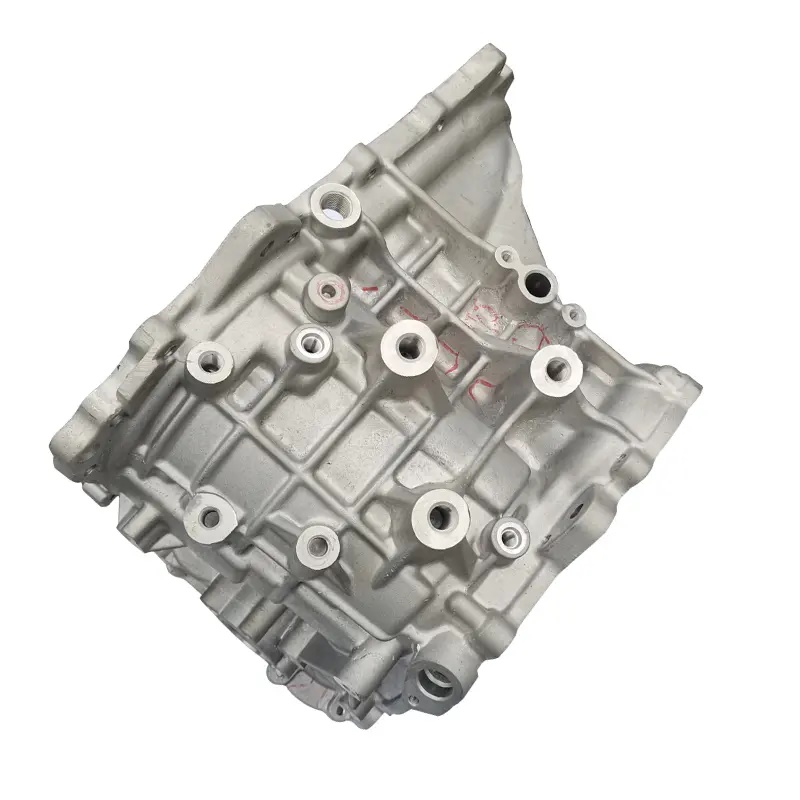
Huabo reviews the circuit board, module, cover, connector and mounting arrangement when those files can be shared. This identifies which bosses position the electronics, which openings require CNC machining, where cables need clearance and which surfaces provide grounding or shielding contact. Nonfunctional outside geometry can then retain practical casting tolerances.
| Feature | Assembly concern | Production response | Inspection |
|---|---|---|---|
| PCB or module bosses | Height or position prevents assembly | Review support ribs, screw method and machining need | Height/position fixture and thread check |
| Connector opening | Misalignment or sharp edge damages connector | Machine critical apertures from the assembly datum and deburr | Profile measurement or mating-part check |
| Cover interface | Gap, rocking or uneven gasket contact | Define cast or machined land and realistic local flatness | Surface/profile and assembly check |
| Grounding point | Paint blocks electrical contact | Mask or post-machine the specified pad | Visual and customer-defined continuity check |
| Internal cavity | Chips or abrasive residue remain after machining | Plan washing access and final cleanliness inspection | Visual or formal cleanliness test when specified |
ADC12 is widely selected for pressure die casting because it supports detailed geometry and secondary machining, but the approved drawing controls the actual alloy. Thermal load, corrosion environment, finish and mechanical requirements should be reviewed before selection. Material certificates or restricted-substance documentation can be included according to the purchase specification.
Internal bosses should be supported without creating large isolated masses that cool slowly. Ribs connect structural and mounting features while preserving flow and ejection access. Huabo reviews wall transitions, draft, fillets, gate direction and overflow positions around connector openings and cover corners. This reduces the need to correct distortion after the mold has already been built.
Connector windows, locating holes, threads, gasket lands and heat-transfer pads may require machining; decorative or clearance surfaces often do not. Concentrating machining on functional interfaces lowers cost and reduces the chance of exposing porosity unnecessarily. The fixture uses the same datum logic as the assembly drawing so separated openings and bosses remain aligned.
Shot blasting, painting, powder coating or conversion treatment can be specified according to appearance and environment. The finish drawing should identify threads, connector fits, thermal pads and grounding points that remain uncoated. If the housing contributes to electromagnetic shielding, the customer should define the required conductive contact path and validate performance in the complete product.
Review 3D, 2D and mating-part information.
Confirm alloy, finish, cosmetic zones and functional interfaces.
Develop tooling around filling, venting, ejection and stable cover geometry.
Die cast, trim and deburr the housing.
CNC machine critical openings, pads, holes and threads from approved datums.
Wash and inspect internal cavities before coating.
Mask electrical and precision areas, then apply the specified finish.
Verify final dimensions, appearance, threads and assembly interfaces.
First-article inspection covers the outside envelope, module positions, connector openings, cover interface and mounting datums. Production checks focus on features that can stop the line: thread acceptance, boss height, connector alignment, burrs and coating buildup. CMM measurement, fixtures and gauges are selected according to tolerance and inspection frequency rather than used as interchangeable marketing terms.
Send the housing and mating-part models, controlled 2D drawing, alloy, finish, annual demand, batch size, cosmetic zoning, grounding or thermal masks and cleanliness requirements. Identify dimensions that apply after coating. Related support includes ADC12 aluminum die casting, CNC machining, surface finishing and inspection.
Can PCB mounting bosses be cast without machining?
They can be reviewed for as-cast use when tolerance and screw strategy allow. Critical locating or threaded features may require secondary machining.
Can the housing provide grounding or shielding contact?
Defined contact pads can be masked or post-machined. Electrical performance must be validated in the customer’s complete assembly.
Can Huabo supply a finished, cleaned housing?
Yes. Casting, machining, washing, masking, coating, inspection and protective packing can be included in the approved process.
 RELATED
 RELATED
 RELATED
 RELATED
Tel: +86 18868921505
Email: lijianguo@cxhuabo.com
Address: Yiheng Road, Changhe Town, Cixi City, Ningbo, Zhejiang Province, China

Scan wechat
Copyright © 2022 Cixi Huabo Machinery Co., Ltd
SitemapThis website uses cookies to ensure you get the best experience on our website.

 Español
 Pусский
 Français
 日本語
日本語



 WhatsApp
 Phone
Phone