
OEM Zinc Alloy Die Casting Small Housing for Electrical and Hardware Assemblies is intended for compact parts where thin walls, small bosses and detailed external geometry must be produced consistently. Zinc alloys are selected for small housings because they can fill fine features and provide good dimensional repeatability, but the tool and finish specification must still account for parting lines, plating buildup, trapped air and the strength of narrow sections.
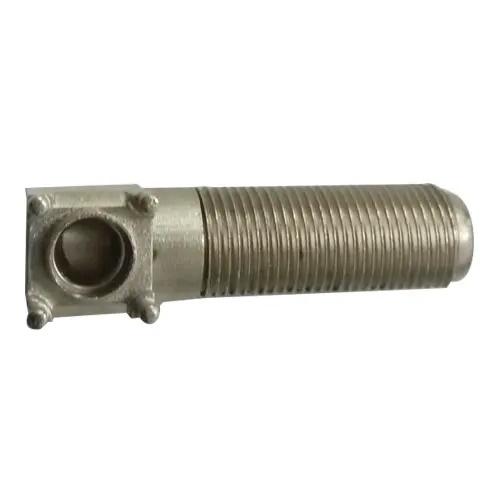
This type of housing may protect a connector, switch mechanism, sensor, latch, appliance component or hardware subassembly. Huabo first identifies which surfaces locate the internal component, which features carry screw load and which areas remain visible. That functional map determines gate location, trimming access, machining needs and inspection frequency.
| Feature | Risk to control | DFM response | Production check |
|---|---|---|---|
| Thin wall and narrow rib | Incomplete fill or cold shut | Review flow path, venting, overflow and local transition | Visual inspection and section review during validation |
| Small threaded boss | Cracking, shallow thread or trapped chips | Confirm boss proportion and choose cast, tapped or insert thread | Thread gauge and cleanliness check |
| Parting line | Flash affecting assembly or appearance | Place the split away from sealing and sliding interfaces | Fixture or visual limit sample |
| Plated surface | Dimension changes, blistering or poor adhesion | Define pre-treatment, plating thickness and masked areas | Finish inspection and post-plating dimension check |
| Internal pocket | Trapped debris or difficult deburring | Provide tool and cleaning access before mold approval | Cleanliness and burr inspection |
Zamak 3, Zamak 5 or another customer-specified grade can be considered according to strength, ductility, surface-finish and dimensional requirements. The final material is controlled by the approved drawing rather than selected from the product name alone. If the part will be plated, exposed to repeated tightening or used in a temperature-sensitive assembly, those conditions should be included with the RFQ.
Not every thread requires the same process. A cast pilot followed by tapping can provide accurate threads for common screws. Thread-forming screws may reduce secondary machining when the application has been validated. Inserts can be evaluated where repeated service or higher pull-out strength is required. The drawing should specify thread class, usable depth, entry chamfer and whether the requirement applies before or after plating.
Small zinc parts often contain several fine details in a limited area. Gate and overflow positions must support complete filling while remaining accessible for trimming. Ejector pins should support the component without marking a visible face or bending a thin wall. Huabo also reviews where flash can interfere with a connector, sliding feature or gasket; these locations receive a defined deburring method instead of relying on a general “remove sharp edges” note.
Natural finish, polishing, painting and electroplating can be evaluated from the appearance and corrosion requirements. Plating thickness should be considered on mating diameters, slots and threads. Cosmetic acceptance is clearer when the drawing marks primary and secondary visible zones and identifies where rack or contact marks are permitted. A finish sample can be approved before repeat production.
First-article inspection relates internal pockets, locating faces, mounting holes and external envelope to a practical datum system. Production checks focus on features that stop assembly: thread acceptance, slot width, boss position, burrs and plating buildup. For very small geometry, a profile projector, optical equipment, gauges or a CMM may be selected according to the drawing and measurement uncertainty.
Please provide 3D data, a dimensioned 2D drawing, zinc grade, finish specification, annual volume, batch quantity and the mating component information. Mark critical dimensions and any electrical contact, pull-out, torque or cosmetic requirement. Huabo can quote zinc die casting, trimming, tapping, polishing and plating coordination and dimensional inspection as one controlled route.
Can very fine lettering or identification marks be cast into the housing?
They can be reviewed from character size, depth, draft and finish requirements. Tool engraving must remain readable after the selected surface treatment.
Should dimensions be specified before or after plating?
The drawing should state the required final condition. Critical fits and threads may need allowance or masking so the plated part meets assembly requirements.
Can Huabo supply the part with installed hardware?
Post-installed inserts, pins or fittings can be evaluated from the assembly drawing, retention requirement and inspection method.
 RELATED
 RELATED
 RELATED
 RELATED
Tel: +86 18868921505
Email: lijianguo@cxhuabo.com
Address: Yiheng Road, Changhe Town, Cixi City, Ningbo, Zhejiang Province, China

Scan wechat
Copyright © 2022 Cixi Huabo Machinery Co., Ltd
SitemapThis website uses cookies to ensure you get the best experience on our website.

 Español
 Pусский
 Français
 日本語
日本語



 WhatsApp
 Phone
Phone