
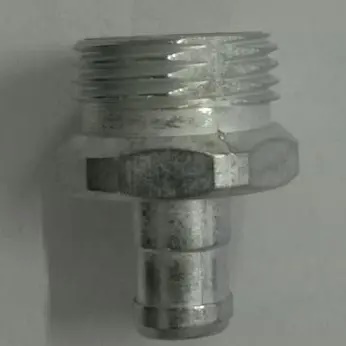
Zinc alloy die casting is often selected for compact components that need fine features, crisp external detail and consistent cosmetic surfaces. Typical examples include connector bases, small housings, cover plates, hardware components and parts with threads or closely spaced mounting features. The process choice should be linked to the part's size, feature definition, surface expectation and assembly function rather than to material price alone.
At quotation stage, the useful questions are whether the part needs formed threads or post-machined threads, whether visible surfaces will be plated or coated, and which dimensions govern the mating assembly. Those details determine the tooling concept and the post-casting work required.
| Feature | Engineering review point |
|---|---|
| Threads and inserts | Confirm thread standard, depth, pull-out requirement and whether tapping is required after casting. |
| Fine ribs and openings | Check fill path, edge strength, trimming access and burr limits. |
| Visible faces | Define cosmetic zones, allowable marks and any plating or coating specification. |
| Mating geometry | Mark locating faces, connector interfaces and dimensions that affect assembly. |
| Surface finish | State whether the part is supplied as-cast, deburred, plated, painted or powder coated. |
Small zinc components can look straightforward while containing difficult tooling features. Deep narrow sections, sharp transitions and internal details need to be evaluated with ejection and tool maintenance in mind. A stable tooling layout is more valuable than forcing every feature into the die when a simple secondary operation gives better control.
For parts with customer-facing appearance, agree the inspection standard before batch production. It is useful to distinguish acceptable casting texture from defects that would affect plating, coating adhesion or the visual result after assembly.
The route may include zinc die casting, gate removal, deburring, drilling or tapping, surface treatment and final inspection. The correct sequence depends on the part: a thread may need protection before coating, while a cosmetic surface may require an agreed handling method after finishing. The quote should reflect those operations instead of treating all zinc parts as the same product.
Related capabilities include zinc die casting service, CNC drilling and tapping and surface finishing options. Buyers working on control enclosures can also review electronics die casting applications.
Please include drawings, zinc alloy preference where specified, thread notes, finish requirement, cosmetic expectations, quantity and any mating-part information. Clear input lets the supplier determine which dimensions should be controlled in casting and which should be finished later.
 RELATED
 RELATED
 RELATED
 RELATED
Tel: +86 18868921505
Email: lijianguo@cxhuabo.com
Address: Yiheng Road, Changhe Town, Cixi City, Ningbo, Zhejiang Province, China

Scan wechat
Copyright © 2022 Cixi Huabo Machinery Co., Ltd
SitemapThis website uses cookies to ensure you get the best experience on our website.

 Español
 Pусский
 Français
 日本語
日本語



 WhatsApp
 Phone
Phone