
Large structural aluminum die casting housings create a different set of risks from small precision covers. The part may have wide faces, long ribs, heavy bosses, multiple mounting areas and visible exterior surfaces. The buyer needs to consider not only casting quality, but also flatness after cooling, CNC machining datum, handling during production and protection during export shipment.
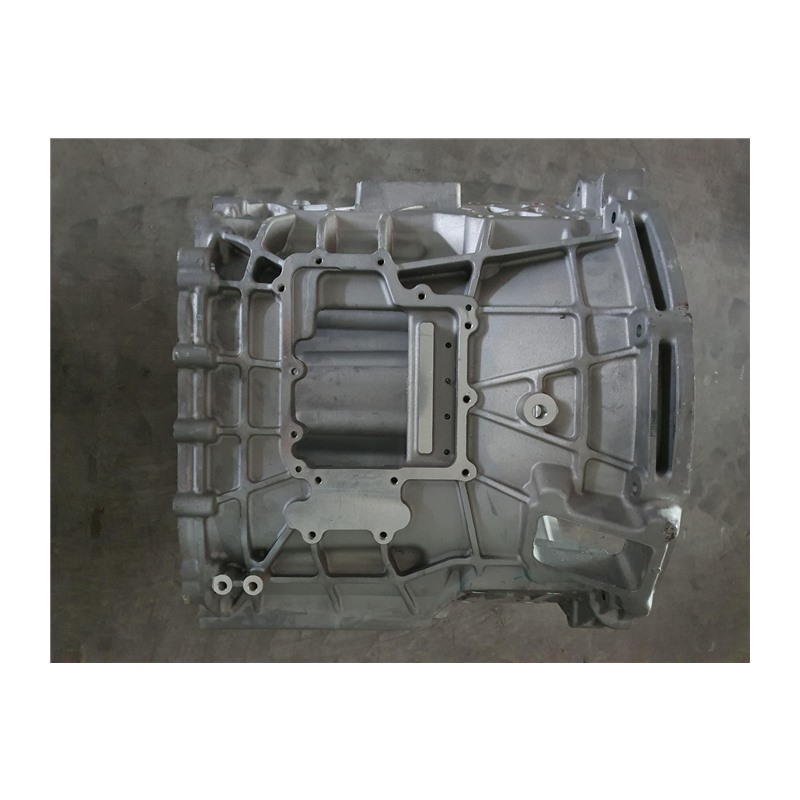
On a small part, a slight local change may be easy to control. On a large housing, the same process variation can become flatness change, diagonal distortion or assembly gap. This is why the early review should focus on wall balance, rib layout, heat concentration and where the part will be clamped during machining. A large casting should not be treated as a scaled-up version of a small cover.
Buyers often ask for stronger walls because the part looks heavy-duty. In die casting, strength is usually better achieved through well-placed ribs and controlled wall transitions rather than simply adding thickness. Unnecessary thick sections can increase shrinkage, porosity risk and cooling variation.
| Design area | Risk on large castings | Better engineering action |
|---|---|---|
| Long flat face | Warping or uneven contact during assembly | Define which face needs machining and flatness control |
| Rib layout | Ribs may create local shrinkage or fail to support load | Balance rib thickness and connect ribs to real load paths |
| Heavy boss | Porosity near screw boss or mounting pad | Use proper fillet, coring and wall transition |
| Machining datum | Large part may shift if fixture reference is weak | Plan stable clamping and datum sequence before samples |
| Visible exterior | Handling marks may appear after inspection | Define appearance zone and packing protection |
Not every large surface needs the same flatness. A mounting face, gasket face or bearing-related area may require CNC machining and inspection. A non-contact exterior face may only need a reasonable cosmetic standard. If the drawing applies tight flatness everywhere, the cost may increase without improving function. If the drawing does not mark the critical face, the supplier may miss the one area that really matters.
Huabo would usually ask which surfaces contact other components, which holes locate the assembly, and whether the housing supports static load or dynamic vibration. This information helps decide where to reserve machining allowance and where cast surfaces are acceptable.
| Stage | Possible problem | Control method |
|---|---|---|
| Trimming and deburring | Long edges may keep burrs or sharp spots | Define deburring standard and inspect functional edges |
| CNC machining | Large casting may deform under clamping force | Use stable fixture plan and avoid over-clamping thin areas |
| Surface finishing | Coating thickness or hanging marks affect appearance | Approve sample and specify visible zones |
| Handling | Scratches, dents or impact marks after QC | Use dedicated handling points and separation during movement |
| Export packing | Heavy parts rub or press against each other in transit | Use foam, partitions, pallets or custom packing as needed |
For international buyers, the part is not finished when it leaves the inspection table. A large structural casting can be damaged during handling, container loading or long-distance transport. Scratches on visible faces, dents on machined surfaces or pressure marks on coated areas may create disputes even when production quality was acceptable. This is why packing instructions should be discussed together with surface finish and inspection.
If the housing has machined faces, they should be protected from direct contact. If it is coated, parts should not rub against each other. If it is heavy, the carton or pallet plan must prevent movement during shipment. For repeat orders, the approved packing method should be kept as part of the quality file.
Buyers should send the 3D model, 2D drawing, annual quantity, critical mounting surfaces, expected finish, visible surface standard, load or assembly information, and export packing expectation. If the part is used in industrial equipment, include whether it will be exposed to vibration, oil, humidity or outdoor conditions.
Related product reference: Aluminum Die Casting Large Structural Equipment Housing. Related pages: aluminum die casting service, quality control and industrial machinery die casting parts.
Tel: +86 18868921505
Email: lijianguo@cxhuabo.com
Address: Yiheng Road, Changhe Town, Cixi City, Ningbo, Zhejiang Province, China

Scan wechat
Copyright © 2022 Cixi Huabo Machinery Co., Ltd
SitemapThis website uses cookies to ensure you get the best experience on our website.

 Español
 Pусский
 Français
 日本語
日本語



 WhatsApp
 Phone
Phone
Comment
(0)